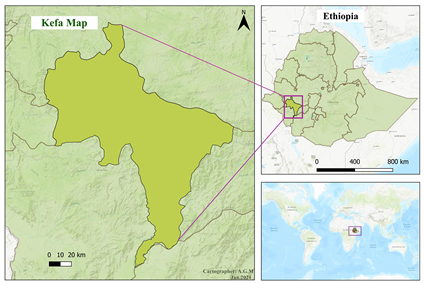

The Kafa people, also called the Kafficho, live in the forested highlands of southwestern Ethiopia. They speak Kafa (Kaffinono), an Omotic language closely related to the languages of neighboring groups such as the Gonga and Gimira. Historically, the Kafa trace their identity to the Kingdom of Kaffa, a powerful monarchy founded in the late 14th century that endured until its conquest and integration into the Ethiopian Empire in 1897. For centuries, the kingdom grew wealthy through trade in gold, ivory, coffee, and forest products, reaching a notable height of influence before being overtaken during the expansion of Emperor Menelik II.
The region remains known for its rich forests, fertile land, and deep cultural ties to the former kingdom. The Kafa people continue to honor ancestral narratives, sacred sites, and historical landmarks connected to the monarchy and its traditions.
The Kafa people live in a mountainous, forest-rich environment with abundant rivers and fertile soil, enabling multiple harvests each year. Families rely heavily on agriculture, growing crops such as maize, barley, enset (false banana), and a variety of vegetables. Coffee remains an important cash crop, and many households also harvest honey, forest spices, and medicinal plants.
Livestock—especially cattle, sheep, and goats—play an important role in household economy, social status, and ceremonial life. Families typically live in extended households organized by clan, with elders overseeing community decisions and mediating conflict. Marriage customs emphasize clan exogamy, requiring spouses to come from different clans, and weddings include feasting, music, and blessings from both families.
Celebrations often reflect both agricultural rhythms and historical memories of the Kafa Kingdom. Feasts during planting and harvest seasons, musical gatherings, and local festivals reinforce community bonds and honor the rich heritage of the region.
Traditional foods include enset-based dishes, roasted grains, meat stews, and honey beverages. Forest-based food systems remain central to daily survival, especially in rural areas where families depend on both cultivated and wild resources.
The Kafa historically practiced a blend of indigenous beliefs, including reverence for ancestral spirits, sacred natural sites, and rituals tied to fertility, rain, and protection. Christianity was introduced during the 16th century and gradually took root, especially after the fall of the kingdom. Today, many Kafa identify with Christian traditions—both Orthodox and Protestant—while others maintain elements of their indigenous belief systems or practice Islam.
Rural Kafa communities face challenges related to deforestation, land pressure, and limited access to modern healthcare and education. Economic stability can be fragile, especially as families depend on small-scale farming and forest products in an area vulnerable to environmental change. Spiritually, deeper discipleship, strong local churches, and biblically grounded leadership can help families navigate rapid cultural transitions. Many young people benefit from mentorship as they move between traditional village life and the aspirations of modern Ethiopia.
Where Christianity is strong, pray that local believers will continue to grow in Christ and become part of the global gospel force, serving as witnesses among nearby groups with less access to the good news.
Pray that the Kafa people will experience the mercy of Jesus Christ in every area of life, growing in faith and hope.
Pray that Christian families will model love, unity, and wisdom as they navigate economic and cultural changes.
Pray that local churches will remain faithful to Scripture, strengthened in leadership and compassion.
Scripture Prayers for the Kafa in Ethiopia.
https://en.wikipedia.org/wiki/Kafficho_people
https://www.101lasttribes.com/tribes/kafa.html
https://www.kafa-biosphere.com/history-2/
https://ehrafworldcultures.yale.edu/cultures/MP14/summary
| Profile Source: Joshua Project |